
Introduction
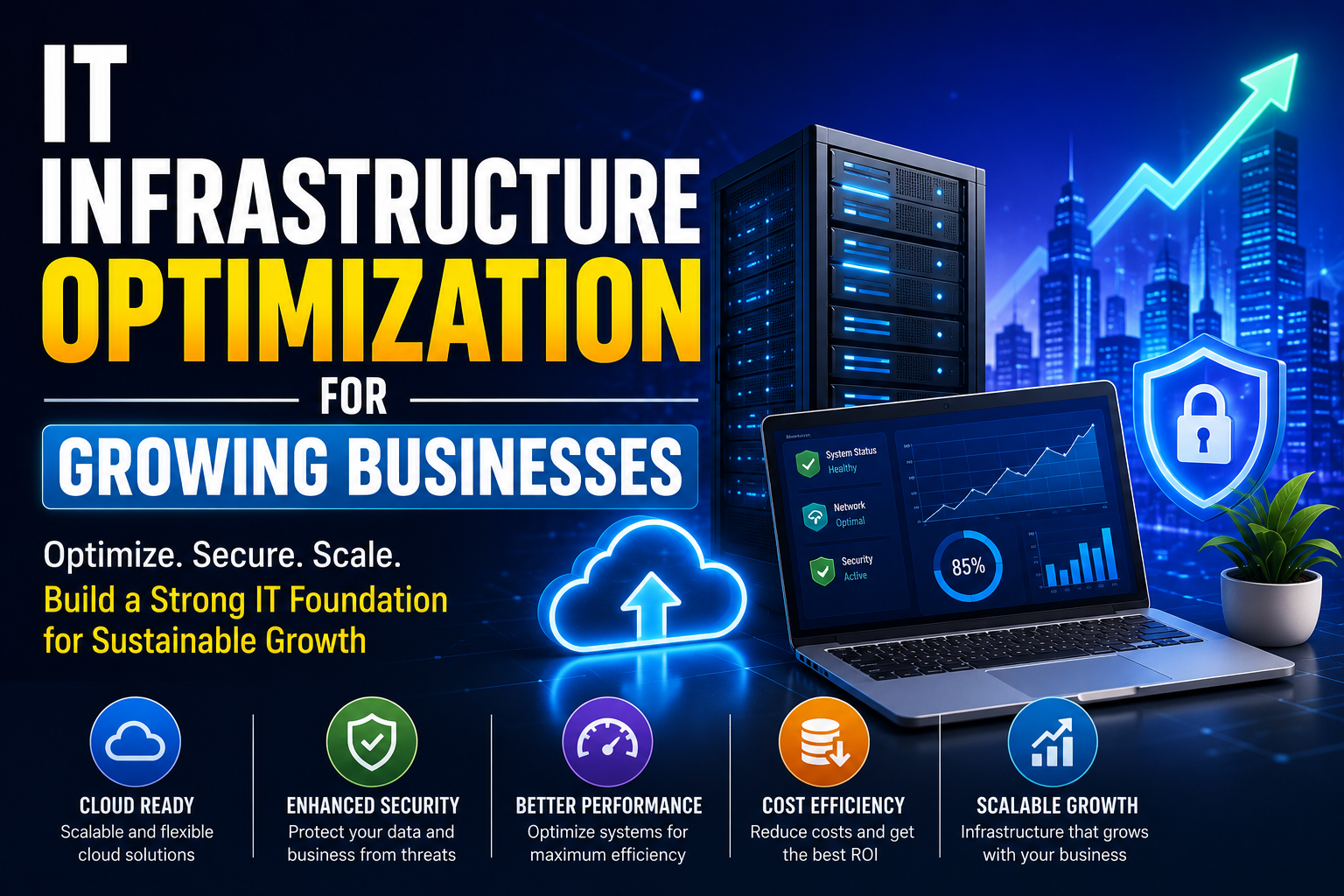
As businesses expand, their technology requirements become more complex. A growing company needs reliable systems, secure networks, fast servers, and efficient software to support daily operations. Without a well-optimized IT infrastructure, businesses may experience slow performance, security vulnerabilities, increased downtime, and higher operational costs.
IT infrastructure optimization is the process of improving hardware, software, networking, cloud services, and security to ensure maximum performance and efficiency. By optimizing IT infrastructure, businesses can reduce costs, improve productivity, enhance cybersecurity, and prepare for future growth.
In this guide, you’ll learn why IT infrastructure optimization is important, its key benefits, best practices, and the technologies that help growing businesses succeed.
What Is IT Infrastructure Optimization?
IT infrastructure optimization involves evaluating and improving every part of a company’s technology environment. This includes computers, servers, cloud platforms, databases, networking equipment, cybersecurity systems, and business applications.
The goal is to ensure that all IT resources work efficiently while supporting business growth and reducing unnecessary expenses.
Why Growing Businesses Need IT Infrastructure Optimization
As businesses grow, they handle more customers, larger amounts of data, and increasingly complex operations. Outdated technology can slow productivity and increase maintenance costs.
Key Benefits
- Improve business performance
- Reduce operational costs
- Increase system reliability
- Enhance cybersecurity
- Minimize downtime
- Support remote work
- Improve employee productivity
- Prepare for future expansion
Optimized IT infrastructure provides a strong foundation for sustainable business growth.
1. Upgrade Network Performance
A fast and reliable network is essential for modern businesses.
Best Practices
- Upgrade business routers and switches
- Improve Wi-Fi coverage
- Monitor network performance
- Increase internet bandwidth
- Secure wireless connections
A well-managed network improves communication and prevents interruptions during daily operations.
2. Move to Cloud Infrastructure
Cloud computing allows businesses to access resources without investing heavily in physical servers.
Benefits
- Flexible storage
- Lower hardware costs
- Easy scalability
- Remote accessibility
- Automatic software updates
- Secure data backup
Cloud infrastructure enables businesses to grow without major technology limitations.
3. Strengthen Cybersecurity
As businesses expand, they become more attractive targets for cybercriminals.
Essential cybersecurity measures include:
- Firewalls
- Antivirus software
- Multi-factor authentication
- Data encryption
- Endpoint protection
- Security monitoring
- Employee cybersecurity training
Strong security protects sensitive business information and customer data.
4. Optimize Business Servers
Servers play an important role in storing data and running business applications.
Server Optimization Tips
- Remove unnecessary files
- Update operating systems
- Monitor server performance
- Upgrade hardware when required
- Use virtualization technologies
Well-maintained servers reduce downtime and improve application performance.
5. Implement Data Backup and Disaster Recovery
Data loss can have serious consequences for any business.
A proper backup strategy should include:
- Automatic daily backups
- Cloud backup solutions
- Disaster recovery planning
- Regular backup testing
- Secure off-site storage
These measures ensure business continuity even during unexpected failures.
6. Automate IT Operations
Automation reduces repetitive manual work and improves operational efficiency.
Examples include:
- Software updates
- System monitoring
- User account management
- Security scans
- Backup scheduling
- Performance reporting
Automation saves time while reducing human error.
7. Monitor IT Performance
Continuous monitoring helps businesses identify problems before they affect operations.
Important metrics include:
- Server uptime
- Network speed
- Storage usage
- CPU performance
- Memory utilization
- Security alerts
Performance monitoring improves system reliability and reduces unexpected downtime.
8. Upgrade Business Hardware
Old hardware slows productivity and increases maintenance costs.
Businesses should regularly evaluate:
- Desktop computers
- Laptops
- Servers
- Network equipment
- Storage devices
- Backup systems
Modern hardware improves speed, reliability, and employee efficiency.
9. Improve Business Software
Outdated software creates compatibility and security problems.
Businesses should:
- Install software updates
- Remove unused applications
- Upgrade business systems
- Use licensed software
- Integrate cloud applications
Updated software ensures better security and smoother performance.
10. Plan for Future Growth
Technology should support business expansion rather than limit it.
Growth planning includes:
- Scalable cloud services
- Flexible storage solutions
- Modern networking equipment
- Future-ready cybersecurity
- AI-powered monitoring tools
A scalable IT infrastructure prevents costly upgrades in the future.
Best Practices for IT Infrastructure Optimization
Businesses should follow these best practices:
Conduct Regular IT Audits
Evaluate hardware, software, and security systems regularly.
Invest in Cybersecurity
Protect business data with advanced security solutions.
Use Cloud Technology
Cloud services improve flexibility while reducing infrastructure costs.
Train Employees
Educate staff about cybersecurity and technology best practices.
Monitor Performance Continuously
Identify and solve problems before they impact business operations.
Common Challenges
Growing businesses may face several IT challenges.
- Aging hardware
- Rising maintenance costs
- Cybersecurity threats
- Network bottlenecks
- Data management issues
- Limited IT resources
Proper planning and regular optimization help overcome these challenges effectively.
Frequently Asked Questions
What is IT infrastructure optimization?
IT infrastructure optimization is the process of improving business technology systems to increase performance, security, and efficiency.
Why is IT infrastructure important?
It supports daily operations, protects business data, improves productivity, and enables long-term business growth.
How often should businesses optimize their IT infrastructure?
Businesses should review their IT infrastructure at least once or twice a year or whenever significant growth occurs.
Can small businesses benefit from IT infrastructure optimization?
Yes. Small businesses can reduce costs, improve security, increase productivity, and prepare for future expansion through optimized IT systems.
Conclusion
IT infrastructure optimization is essential for businesses that want to grow efficiently in today’s digital environment. By improving networks, upgrading hardware, adopting cloud solutions, strengthening cybersecurity, and automating IT operations, businesses can increase productivity while reducing costs and downtime.
An optimized IT infrastructure provides the flexibility and reliability needed to support future expansion and changing business demands. Investing in modern technology today helps businesses stay competitive, secure, and prepared for long-term success.