
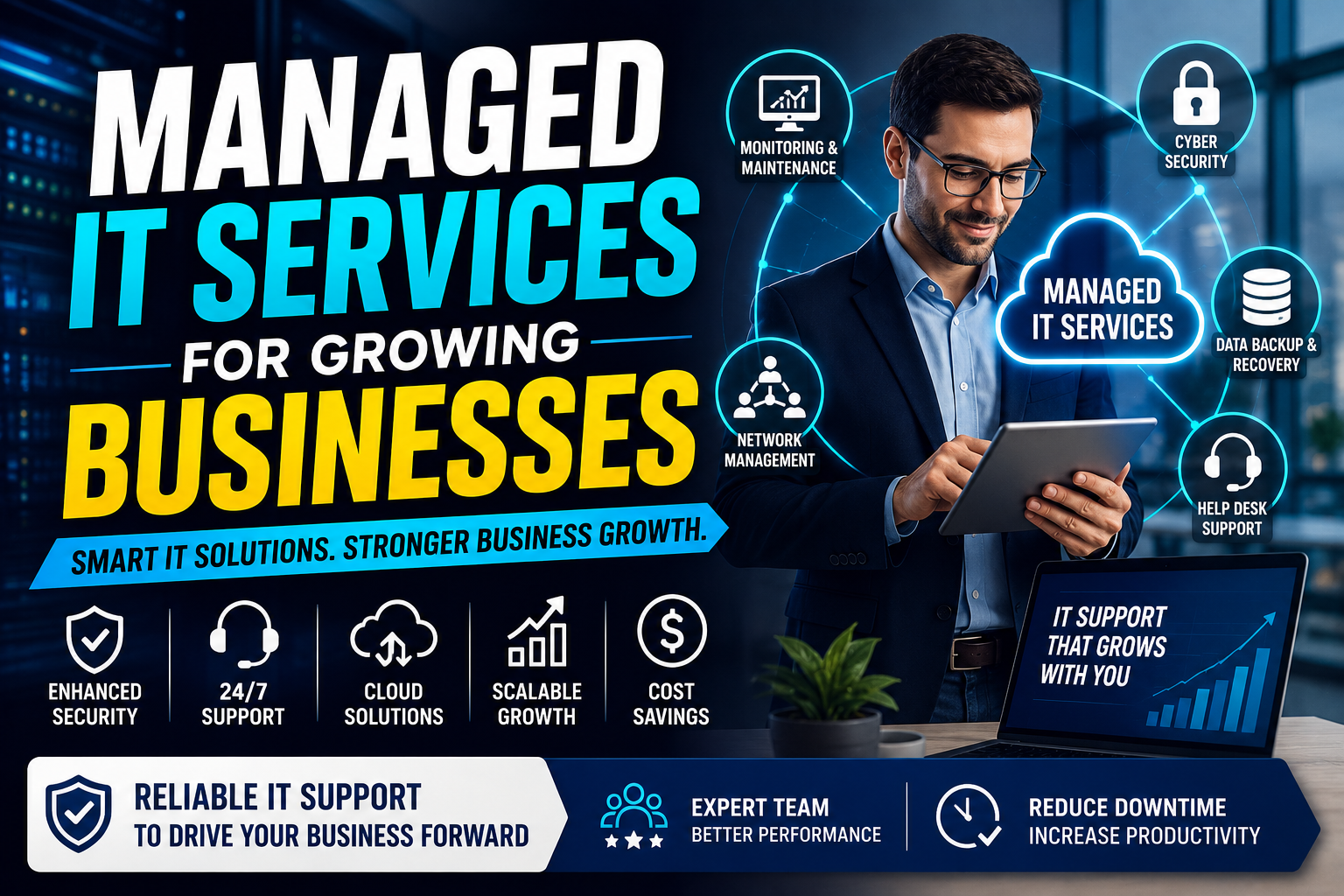
As businesses grow, their technology requirements become more complex. Managing networks, cybersecurity, cloud services, software updates, and technical support can quickly become overwhelming for an in-house team. This is why many companies choose managed IT services to keep their technology secure, reliable, and efficient.
Managed IT services provide businesses with proactive technology management, expert support, and advanced security solutions. Instead of waiting for problems to occur, managed service providers monitor systems around the clock, helping businesses reduce downtime and improve productivity.
In this article, we’ll explore what managed IT services are, their benefits, and why they are essential for growing businesses.
What Are Managed IT Services?
Managed IT services are professional technology support services provided by an external IT company. Instead of handling all technical issues internally, businesses partner with a managed service provider (MSP) that takes responsibility for maintaining, monitoring, and securing their IT infrastructure.
Managed IT services commonly include:
- 24/7 IT monitoring
- Help desk support
- Network management
- Cloud services
- Cybersecurity
- Data backup and recovery
- Software updates
- Hardware management
- Email security
- IT consulting
These services allow businesses to focus on their core operations while experienced IT professionals manage their technology.
Why Growing Businesses Need Managed IT Services
As companies expand, they often face new technology challenges, including increased cybersecurity risks, larger data storage requirements, remote work environments, and more complex IT systems.
Managed IT services help businesses by providing:
- Reliable technology support
- Better cybersecurity protection
- Reduced downtime
- Scalable IT infrastructure
- Predictable monthly costs
- Access to experienced IT professionals
This proactive approach helps businesses avoid costly technical issues and maintain smooth operations.
Key Benefits of Managed IT Services
1. 24/7 Monitoring and Support
One of the biggest advantages of managed IT services is continuous system monitoring. IT professionals identify and resolve potential problems before they impact business operations.
This proactive monitoring helps reduce downtime and ensures maximum system performance.
2. Improved Cybersecurity
Cyber threats continue to grow every year. Businesses face risks such as ransomware, phishing attacks, malware, and data breaches.
Managed IT providers implement advanced security measures, including:
- Firewall management
- Antivirus protection
- Endpoint security
- Multi-factor authentication
- Email security
- Security monitoring
- Vulnerability assessments
These solutions help protect sensitive business information.
3. Cost Savings
Hiring and maintaining an in-house IT department can be expensive. Managed IT services provide access to experienced professionals at a predictable monthly cost.
Businesses save money on:
- IT staffing
- Employee training
- Hardware maintenance
- Emergency repairs
- Software management
This makes managed IT services an affordable option for small and medium-sized businesses.
4. Better Productivity
Technical issues can significantly reduce employee productivity. Managed IT services ensure systems remain operational so employees can focus on their work instead of dealing with technology problems.
Faster issue resolution also minimizes interruptions.
5. Scalable IT Solutions
Growing businesses need technology that can expand alongside them.
Managed IT providers offer scalable services such as:
- Cloud storage
- User account management
- Network expansion
- Business applications
- Remote workforce support
Businesses can easily add new employees, devices, and services without major infrastructure changes.
6. Data Backup and Disaster Recovery
Unexpected events such as cyberattacks, hardware failures, or natural disasters can result in data loss.
Managed IT providers create secure backup strategies and disaster recovery plans to ensure important business information can be restored quickly.
Reliable backups reduce downtime and protect critical business operations.
7. Cloud Services Management
Cloud computing has become essential for modern businesses.
Managed IT providers help companies:
- Migrate to the cloud
- Manage Microsoft 365
- Configure Google Workspace
- Secure cloud storage
- Optimize cloud performance
Cloud services improve collaboration, flexibility, and business continuity.
Common Managed IT Services
Businesses typically receive a wide range of technology services, including:
- Network monitoring
- Server management
- Desktop support
- Remote IT support
- Cloud infrastructure
- Cybersecurity solutions
- Software installation
- Hardware maintenance
- Data backup
- Disaster recovery
- Email security
- IT consulting
These services provide complete technology management under one provider.
Industries That Benefit from Managed IT Services
Managed IT services are valuable for many industries, including:
- Healthcare
- Education
- Retail
- Manufacturing
- Financial services
- Law firms
- Real estate
- E-commerce
- Logistics
- Professional service companies
Any business that relies on computers, networks, or cloud applications can benefit from professional IT management.
How to Choose the Right Managed IT Service Provider
When selecting a managed IT provider, consider the following factors:
- Industry experience
- 24/7 technical support
- Cybersecurity expertise
- Cloud service capabilities
- Service Level Agreements (SLAs)
- Response times
- Customer reviews
- Transparent pricing
- Scalability
- Proven track record
Choosing the right provider ensures your business receives reliable and secure IT support.
Why Businesses Are Moving to Managed IT Services
Modern businesses need technology that is secure, scalable, and always available. Managed IT services provide proactive maintenance instead of waiting for systems to fail.
Companies choose managed IT providers because they offer:
- Lower operating costs
- Better security
- Improved efficiency
- Expert technical knowledge
- Business continuity
- Reduced downtime
- Access to the latest technology
These benefits allow organizations to stay competitive while focusing on growth.
Conclusion
Managed IT services have become an essential investment for growing businesses. They provide proactive support, advanced cybersecurity, reliable cloud management, and scalable technology solutions that help organizations operate efficiently.
Whether your company needs 24/7 monitoring, data protection, cloud services, or expert technical support, partnering with a trusted managed IT service provider can improve productivity, reduce risks, and support long-term business success.
As technology continues to evolve, businesses that invest in managed IT services will be better prepared to meet future challenges while maintaining secure and reliable operations.