
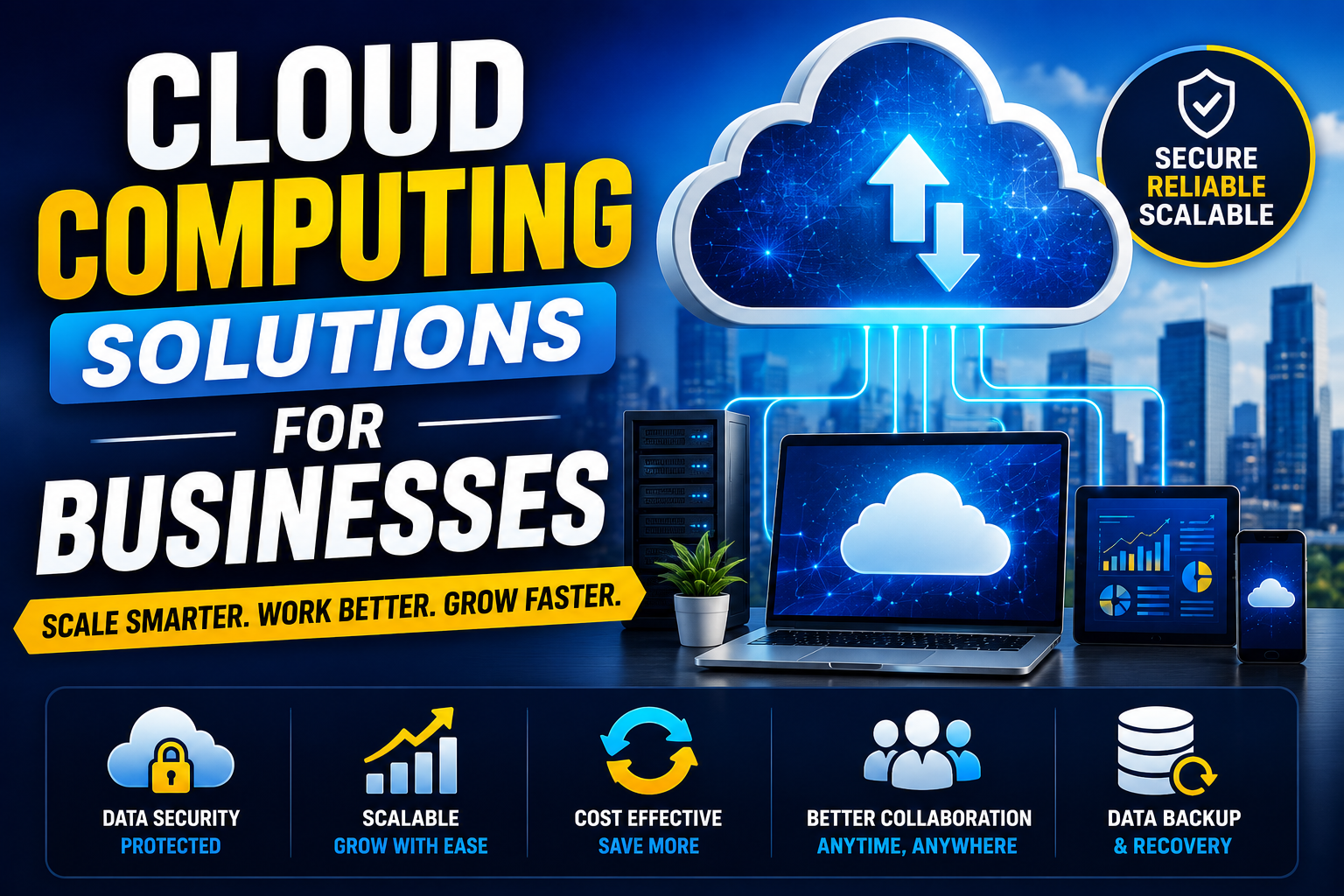
In today’s fast-paced digital world, businesses need technology that is secure, scalable, and cost-effective. Traditional IT infrastructure often requires expensive hardware, ongoing maintenance, and significant resources to manage. Cloud computing has changed the way businesses operate by providing flexible, reliable, and secure access to applications, data, and computing resources over the internet.
Whether you’re a small startup or a large enterprise, cloud computing solutions can improve collaboration, increase productivity, reduce operational costs, and support long-term business growth. In this article, we’ll explore what cloud computing is, its benefits, types, and why every modern business should consider moving to the cloud.
What Is Cloud Computing?
Cloud computing is the delivery of computing services such as servers, storage, databases, networking, software, and analytics through the internet instead of relying on physical hardware located on-site.
Businesses can access these services whenever they need them without investing heavily in expensive infrastructure. Cloud solutions allow organizations to pay only for the resources they use, making them both efficient and cost-effective.
Why Businesses Are Moving to the Cloud
Modern businesses are adopting cloud computing because it offers flexibility and helps them respond quickly to changing business needs.
Some common reasons include:
- Lower IT costs
- Improved data security
- Remote work support
- Automatic software updates
- Faster business operations
- Easy scalability
- Reliable data backup
- Business continuity
Cloud technology allows companies to focus on growth instead of maintaining complex IT systems.
Key Benefits of Cloud Computing Solutions
1. Cost Savings
Cloud computing reduces the need to purchase expensive servers, networking equipment, and software licenses. Businesses also save money on maintenance, electricity, and hardware upgrades.
Most cloud providers use flexible pricing models, allowing businesses to pay only for the services they use.
2. Scalability
As a business grows, its technology requirements also increase. Cloud solutions make it easy to scale resources without replacing existing infrastructure.
Organizations can quickly add:
- Storage
- Computing power
- Applications
- User accounts
- Virtual servers
This flexibility makes cloud computing ideal for growing businesses.
3. Enhanced Security
Security is one of the biggest concerns for businesses. Professional cloud providers invest heavily in protecting customer data through advanced security technologies.
Security features often include:
- Data encryption
- Multi-factor authentication
- Firewall protection
- Continuous monitoring
- Threat detection
- Identity management
- Automatic security updates
These features help businesses reduce cyber risks.
4. Better Collaboration
Cloud platforms allow employees to access files, applications, and business data from anywhere with an internet connection.
Teams can:
- Share documents
- Edit files together
- Attend virtual meetings
- Access company applications remotely
- Improve communication
This supports hybrid and remote work environments.
5. Business Continuity
Unexpected events such as hardware failures, cyberattacks, or natural disasters can interrupt business operations.
Cloud computing improves business continuity by offering:
- Automatic backups
- Disaster recovery
- Data replication
- High availability
- Fast recovery options
Businesses can restore operations quickly with minimal downtime.
6. Automatic Updates
Cloud service providers regularly update software, operating systems, and security features.
Businesses no longer need to spend time installing updates manually, allowing IT teams to focus on strategic projects.
Types of Cloud Computing
Public Cloud
Public cloud services are shared across multiple customers and are managed by third-party providers.
Best for:
- Small businesses
- Startups
- Web applications
- General business operations
Private Cloud
Private cloud environments are dedicated to a single organization, offering greater control and security.
Best for:
- Financial institutions
- Healthcare organizations
- Government agencies
- Large enterprises
Hybrid Cloud
A hybrid cloud combines public and private cloud environments, giving businesses greater flexibility.
Best for:
- Businesses with sensitive data
- Companies requiring high performance
- Organizations with changing workloads
Common Cloud Computing Services
Businesses use cloud solutions for many different purposes, including:
- Cloud storage
- Virtual servers
- Business email
- Data backup
- Disaster recovery
- Website hosting
- Customer relationship management (CRM)
- Enterprise Resource Planning (ERP)
- File sharing
- Collaboration tools
These services help improve efficiency and simplify business operations.
Industries That Benefit from Cloud Computing
Cloud computing is suitable for almost every industry, including:
- Healthcare
- Education
- Retail
- Manufacturing
- Banking
- Real estate
- Logistics
- Professional services
- E-commerce
- Technology companies
Organizations of all sizes can benefit from secure and scalable cloud solutions.
How to Choose the Right Cloud Solution
Before selecting a cloud provider, businesses should evaluate:
- Security standards
- Scalability
- Pricing
- Customer support
- Data backup options
- Compliance requirements
- Performance
- Integration capabilities
- Reliability
- Service Level Agreements (SLAs)
Choosing the right provider ensures better performance and long-term success.
Why Cloud Computing Is Essential for Business Growth
Cloud computing gives businesses the flexibility to adapt quickly to market changes while keeping technology costs under control.
It enables organizations to:
- Launch new services faster
- Improve customer experience
- Increase employee productivity
- Strengthen cybersecurity
- Reduce operational expenses
- Support remote teams
- Scale efficiently
These advantages help businesses remain competitive in today’s digital economy.
Conclusion
Cloud computing has become one of the most important technologies for modern businesses. It offers secure, scalable, and cost-effective solutions that improve efficiency, collaboration, and business continuity.
Whether your organization wants to reduce IT costs, improve cybersecurity, support remote employees, or prepare for future growth, cloud computing provides the flexibility and reliability needed to succeed.
Investing in the right cloud computing solution allows businesses to stay competitive, improve productivity, and confidently embrace digital transformation.