
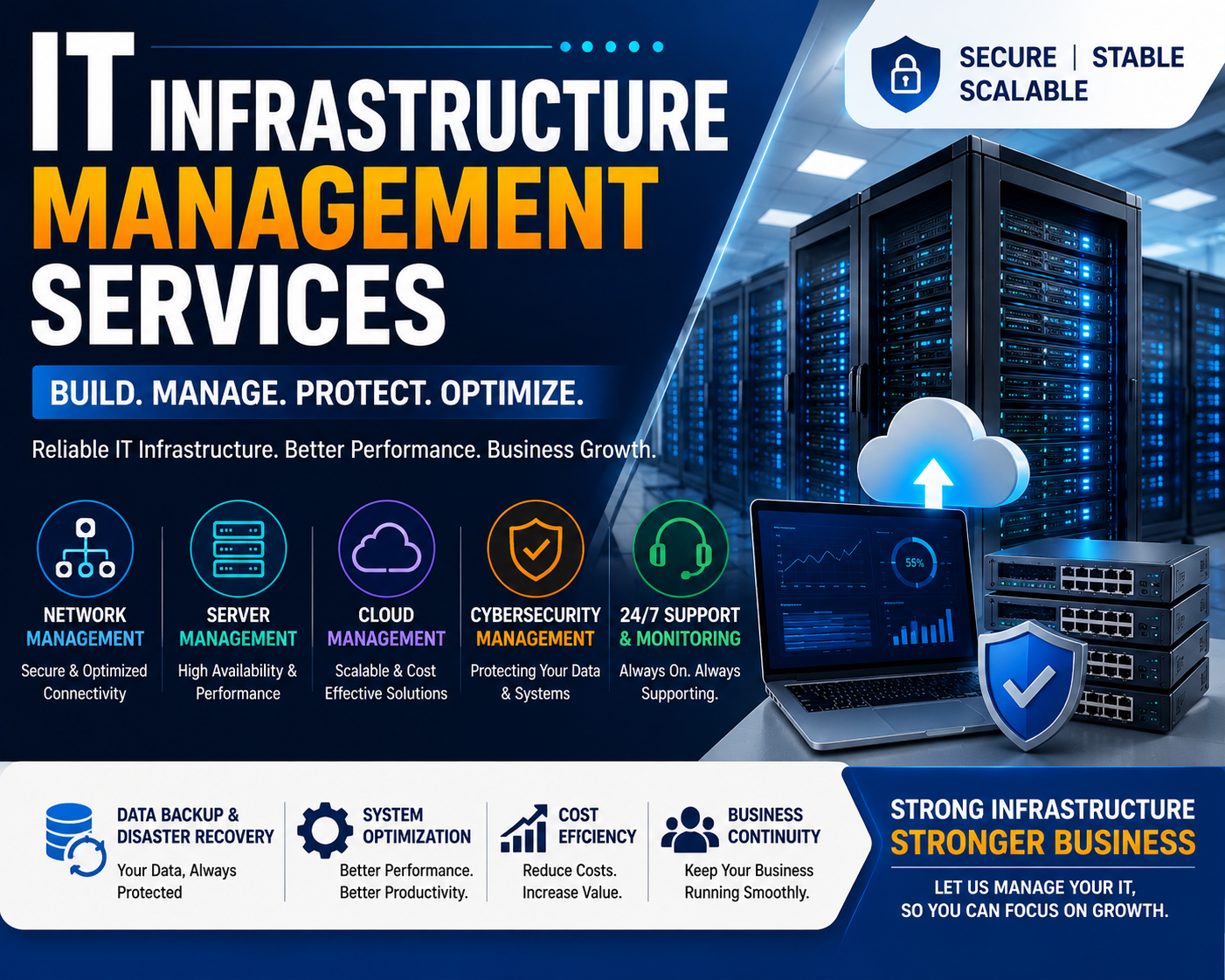
Build a Reliable, Secure, and Scalable IT Environment
Technology is the backbone of every modern business. From servers and networks to cloud platforms and business applications, organizations depend on a strong IT infrastructure to operate efficiently. However, managing IT systems requires expertise, continuous monitoring, and proactive maintenance.
IT Infrastructure Management Services help businesses maintain secure, high-performing, and reliable IT environments while reducing downtime and improving operational efficiency.
What Are IT Infrastructure Management Services?
IT Infrastructure Management Services involve the monitoring, maintenance, optimization, and support of an organization’s IT environment. These services cover hardware, software, networks, cloud systems, data storage, cybersecurity, and technical support.
Instead of handling complex IT operations internally, businesses can rely on experienced IT professionals to manage their infrastructure efficiently.
Why IT Infrastructure Management Matters
A well-managed IT infrastructure improves productivity, protects business data, and ensures systems remain available around the clock.
Benefits
- Reduced downtime
- Improved system performance
- Enhanced cybersecurity
- Better scalability
- Lower IT costs
- Increased business productivity
- Reliable technical support
- Simplified IT management
Core IT Infrastructure Management Services
Network Management
A secure and optimized network is essential for business communication and data transfer.
Services Include
- Network monitoring
- Router and switch management
- Wi-Fi optimization
- Network troubleshooting
- Performance monitoring
Server Management
Servers store business applications and data, making regular maintenance critical.
Services Include
- Server monitoring
- Software updates
- Performance optimization
- Backup management
- Security patching
Cloud Infrastructure Management
Cloud services provide flexibility and scalability while reducing hardware costs.
Benefits
- Remote access
- Secure cloud storage
- Automatic backups
- Easy scalability
- Reduced infrastructure costs
Cybersecurity Management
Protecting business systems from cyber threats is an essential part of IT infrastructure.
Security Services
- Firewall management
- Antivirus protection
- Endpoint security
- Multi-Factor Authentication
- Security monitoring
Data Backup and Disaster Recovery
Unexpected events can cause data loss or system failures.
Recovery Services
- Automated backups
- Disaster recovery planning
- Cloud backup solutions
- Fast data restoration
- Business continuity support
Help Desk and Technical Support
Professional IT support ensures employees receive quick assistance whenever technical issues occur.
Services Include
- Remote support
- On-site assistance
- Software troubleshooting
- Hardware support
- User account management
Best Practices for IT Infrastructure Management
Businesses should:
- Monitor systems 24/7.
- Keep software updated.
- Perform regular security audits.
- Automate backups.
- Replace outdated hardware.
- Monitor network performance.
- Train employees on cybersecurity.
- Review infrastructure regularly.
Industries That Benefit from IT Infrastructure Services
These services are valuable for:
- Healthcare
- Finance
- Retail
- Manufacturing
- Education
- Logistics
- Real Estate
- Law Firms
- E-commerce
- IT Companies
How to Choose the Right IT Infrastructure Partner
Before selecting an IT service provider, consider:
- Industry experience
- Certified IT professionals
- 24/7 monitoring
- Security expertise
- Cloud management capabilities
- Fast response times
- Transparent pricing
- Reliable customer support
Choosing the right partner ensures long-term stability and business growth.
Advantages of Managed IT Infrastructure
Professional infrastructure management offers several advantages:
Improved Performance
Optimized systems operate faster and more efficiently.
Enhanced Security
Continuous monitoring helps identify and stop cyber threats before they cause damage.
Lower Operating Costs
Managed services reduce the need for large in-house IT teams.
Better Scalability
Infrastructure can grow as your business expands.
Business Continuity
Reliable backup and disaster recovery minimize operational disruptions.
Future of IT Infrastructure Management
Artificial Intelligence (AI), automation, cloud computing, predictive monitoring, and Zero Trust Security are shaping the future of IT infrastructure management. Businesses adopting these technologies can improve efficiency, reduce risks, and stay competitive in an evolving digital landscape.
Conclusion
A reliable IT infrastructure is essential for business success. From network management and cloud services to cybersecurity and disaster recovery, professional IT Infrastructure Management Services help organizations improve performance, strengthen security, and reduce downtime.
By partnering with experienced IT professionals, businesses can focus on growth while ensuring their technology remains secure, efficient, and ready for future challenges.
Frequently Asked Questions (FAQs)
What are IT Infrastructure Management Services?
These are professional services that manage, monitor, secure, and optimize business IT systems, including networks, servers, cloud platforms, and cybersecurity.
Why do businesses need IT infrastructure management?
It improves system reliability, enhances security, reduces downtime, and ensures technology supports business growth.
What is included in IT infrastructure management?
Services typically include network management, server administration, cloud management, cybersecurity, data backup, disaster recovery, and technical support.
Is managed IT infrastructure suitable for small businesses?
Yes. Managed IT services help small businesses access enterprise-level IT expertise without the cost of maintaining a large internal IT department.