
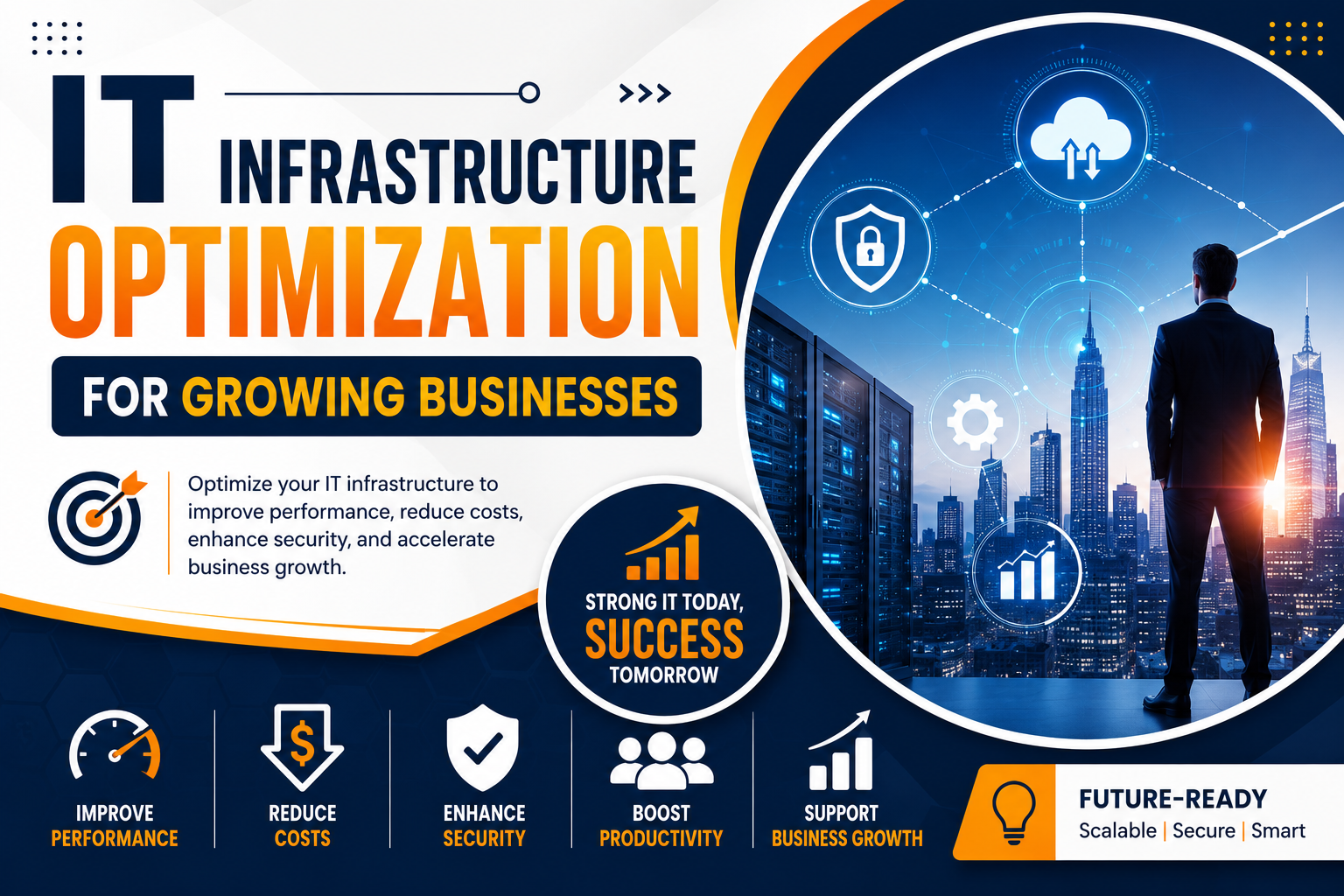
IT Infrastructure Optimization for Growing Businesses
As businesses grow, their technology needs become more complex. An outdated or poorly managed IT infrastructure can slow productivity, increase operational costs, and expose organizations to security risks. IT infrastructure optimization helps businesses modernize their technology environment, improve system performance, and prepare for future growth.
Whether you operate a small business or a rapidly expanding company, optimizing your IT infrastructure ensures your technology supports your goals instead of limiting them. By upgrading hardware, adopting cloud solutions, improving network performance, and strengthening cybersecurity, businesses can create a more reliable and efficient IT environment.
What Is IT Infrastructure Optimization?
IT infrastructure optimization is the process of improving the performance, reliability, and security of an organization’s technology systems. This includes servers, networks, cloud platforms, storage devices, software, and cybersecurity solutions.
The goal is to eliminate outdated systems, reduce unnecessary expenses, improve operational efficiency, and create a scalable IT environment that supports business growth.
Why IT Infrastructure Optimization Matters
A well-optimized IT infrastructure helps businesses operate more efficiently while reducing downtime and maintenance costs. Modern technology enables employees to work faster, collaborate better, and access business data securely from anywhere.
Key benefits include:
- Improved system performance
- Reduced operational costs
- Stronger cybersecurity
- Better data protection
- Increased employee productivity
- Faster application performance
- Easy scalability for future growth
Key Components of IT Infrastructure Optimization
1. Cloud Computing
Moving business applications and data to the cloud provides flexibility, scalability, and cost savings. Cloud services also improve collaboration and enable remote work.
2. Network Optimization
A reliable and high-speed network is essential for business operations. Regular monitoring, bandwidth management, and updated networking equipment help reduce delays and improve connectivity.
3. Server Modernization
Replacing outdated servers with modern infrastructure improves performance, reduces maintenance costs, and supports growing workloads.
4. Data Backup and Disaster Recovery
Automatic backups and disaster recovery plans protect valuable business data from accidental loss, cyberattacks, or hardware failures.
5. Cybersecurity Improvements
Installing firewalls, antivirus software, endpoint protection, and multi-factor authentication helps secure sensitive business information and reduces cyber risks.
Benefits for Growing Businesses
Optimized IT infrastructure offers several long-term advantages:
- Faster business operations
- Lower maintenance costs
- Better customer experience
- Increased employee efficiency
- Enhanced business continuity
- Secure remote access
- Easier expansion as the business grows
Businesses that invest in modern IT infrastructure are better prepared to adapt to changing market demands and technological advancements.
Best Practices for IT Infrastructure Optimization
To achieve the best results, businesses should follow these practices:
- Regularly update hardware and software.
- Monitor network performance continuously.
- Use cloud-based storage and applications.
- Implement strong cybersecurity policies.
- Perform routine data backups.
- Train employees on cybersecurity awareness.
- Conduct periodic IT audits to identify areas for improvement.
Common Challenges
Many businesses face challenges such as legacy systems, limited budgets, cybersecurity threats, and increasing data storage requirements. A strategic IT optimization plan helps overcome these issues while ensuring long-term stability and growth.
Conclusion
IT infrastructure optimization is no longer optional for growing businesses. A modern, secure, and scalable IT environment improves productivity, reduces operational costs, strengthens cybersecurity, and supports future expansion. By investing in cloud technologies, network improvements, server upgrades, and data protection strategies, businesses can build a reliable foundation for long-term success.
FAQ
What is IT infrastructure optimization?
It is the process of improving business technology systems to increase performance, security, and efficiency.
Why is IT infrastructure important for business growth?
A strong IT infrastructure supports daily operations, protects business data, and allows companies to scale without major disruptions.
What are the main benefits of IT infrastructure optimization?
Improved performance, lower costs, better security, increased productivity, and easier scalability.
SEO Keywords:
IT Infrastructure Optimization, Business IT Solutions, IT Infrastructure Management, Cloud Computing, Network Optimization, Business Technology, Managed IT Services, IT Security, Business Growth, Digital Infrastructure.