
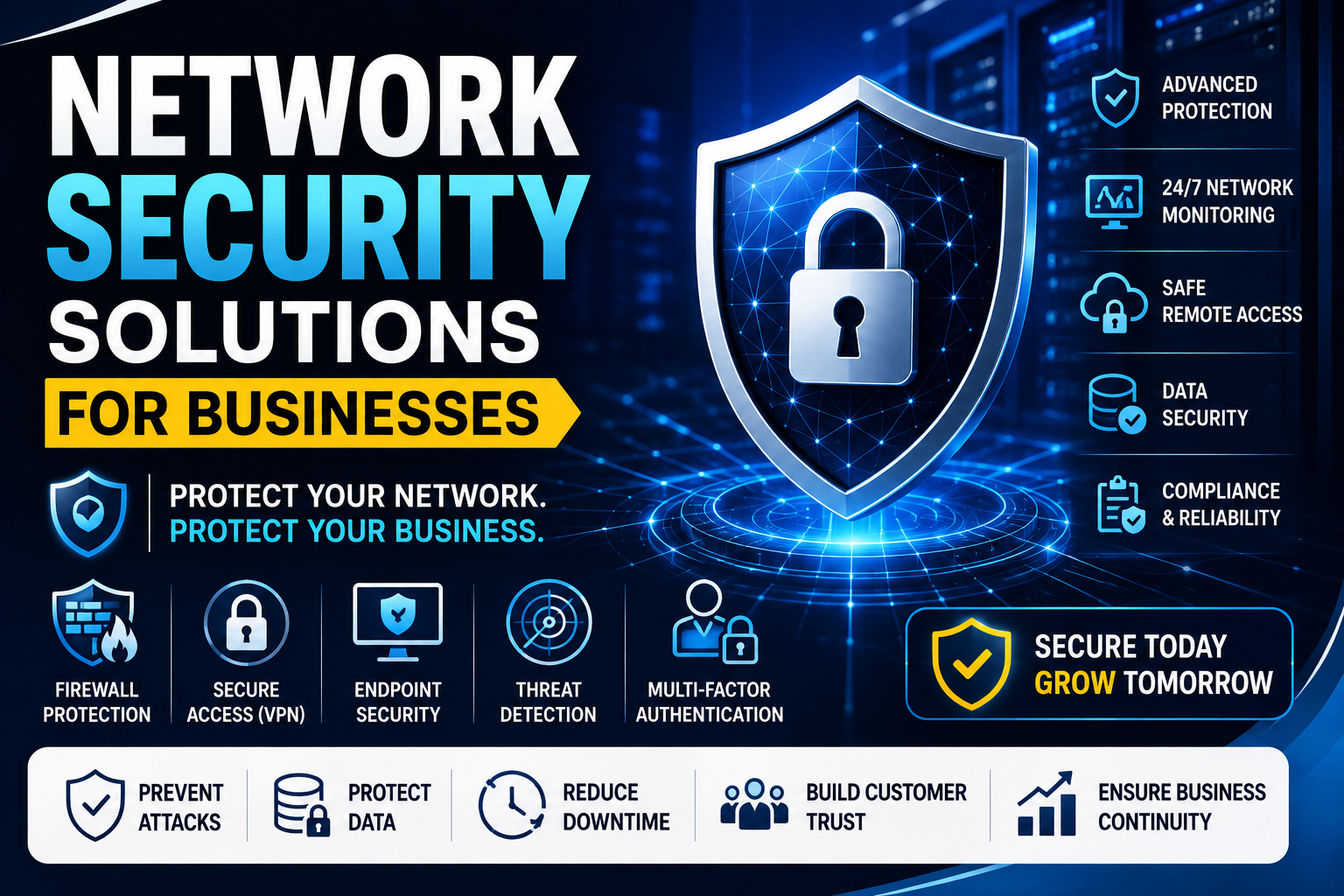
Protect Your Business Network from Modern Cyber Threats
As businesses become more dependent on digital technology, protecting company networks has become more important than ever. Every day, organizations face cyber threats such as malware, ransomware, phishing attacks, unauthorized access, and data breaches. Without a strong network security strategy, these threats can disrupt operations, damage customer trust, and result in significant financial losses.
Investing in reliable Network Security Solutions for Businesses helps safeguard your systems, protect sensitive information, and ensure uninterrupted business operations.
What Are Network Security Solutions?
Network security solutions are technologies, tools, and security practices designed to protect business networks from cyber threats. These solutions monitor network traffic, prevent unauthorized access, detect suspicious activities, and secure data as it moves across your organization.
Whether your employees work from the office or remotely, network security is essential for maintaining a safe digital environment.
Why Network Security Is Important
Businesses of every size rely on secure networks to communicate, share files, process customer information, and run critical applications. A single cyberattack can lead to downtime, financial loss, and long-term reputational damage.
Benefits of Strong Network Security
- Protects sensitive business data
- Prevents unauthorized access
- Reduces the risk of cyberattacks
- Ensures business continuity
- Builds customer confidence
- Supports compliance requirements
- Protects remote work environments
Common Network Security Threats
1. Malware
Malware includes viruses, spyware, worms, and other malicious software that can damage systems or steal confidential data.
Prevention
- Install advanced antivirus software
- Keep systems updated
- Scan downloaded files regularly
2. Phishing Attacks
Cybercriminals use fake emails or websites to trick employees into revealing passwords or financial information.
Prevention
- Conduct employee awareness training
- Enable email filtering
- Verify suspicious messages before responding
3. Ransomware
Ransomware encrypts business files and demands payment for their release.
Prevention
- Perform regular data backups
- Update operating systems
- Restrict administrator privileges
- Use endpoint protection
4. Insider Threats
Employees or contractors may accidentally or intentionally expose confidential business information.
Prevention
- Limit access to sensitive data
- Monitor user activity
- Implement role-based permissions
5. DDoS Attacks
Distributed Denial-of-Service (DDoS) attacks overwhelm business servers with excessive traffic, making websites and services unavailable.
Prevention
- Use DDoS protection services
- Monitor unusual traffic patterns
- Deploy cloud-based security solutions
Essential Network Security Solutions
Firewall Protection
Firewalls act as the first line of defense by filtering incoming and outgoing network traffic. They block unauthorized access while allowing trusted communication.
Benefits
- Blocks suspicious traffic
- Protects internal systems
- Improves network visibility
Intrusion Detection and Prevention Systems (IDPS)
These systems monitor network activity and automatically detect or block suspicious behavior before it causes damage.
Benefits
- Real-time threat detection
- Automatic attack prevention
- Continuous monitoring
Virtual Private Network (VPN)
VPNs encrypt internet connections, allowing employees to securely access company resources from anywhere.
Benefits
- Secure remote work
- Data encryption
- Improved privacy
Endpoint Security
Every device connected to your business network should be protected with endpoint security software.
This includes:
- Desktop computers
- Laptops
- Mobile devices
- Tablets
- Company servers
Multi-Factor Authentication (MFA)
MFA requires users to verify their identity using multiple authentication methods, making unauthorized access much more difficult.
Examples include:
- Verification codes
- Authentication apps
- Fingerprint scanning
- Face recognition
Best Practices for Network Security
Businesses should follow these security practices:
- Keep software updated.
- Use strong passwords.
- Enable Multi-Factor Authentication.
- Encrypt sensitive business data.
- Backup important files regularly.
- Monitor network activity.
- Train employees on cybersecurity.
- Restrict administrator access.
- Secure Wi-Fi networks.
- Conduct regular security audits.
Benefits of Professional Network Security Services
Working with an experienced IT security provider offers several advantages:
24/7 Network Monitoring
Continuous monitoring helps detect and stop threats before they impact your business.
Faster Threat Response
Security experts can quickly identify and resolve incidents.
Improved Compliance
Professional security services help businesses meet industry regulations and data protection standards.
Reduced Downtime
Strong security systems minimize business interruptions caused by cyberattacks.
Better Customer Trust
Customers are more likely to trust businesses that protect their personal information.
Industries That Need Network Security
Network security is essential across many industries, including:
- Healthcare
- Finance
- Retail
- Manufacturing
- Education
- Government
- Real Estate
- Logistics
- E-commerce
- IT Services
Choosing the Right Network Security Provider
When selecting a network security partner, consider:
- Industry experience
- 24/7 monitoring services
- Certified security professionals
- Firewall management
- Threat detection
- Cloud security expertise
- Data backup solutions
- Technical support availability
Choosing the right provider ensures your business remains protected against evolving cyber threats.
Future of Network Security
Emerging technologies such as Artificial Intelligence (AI), machine learning, Zero Trust Security, and automated threat detection are reshaping network security. Businesses that adopt these advanced security solutions will be better prepared to defend against increasingly sophisticated cyberattacks.
Conclusion
Network security is no longer optional—it’s a critical part of running a successful business. As cyber threats continue to evolve, organizations must invest in reliable security solutions that protect their networks, data, employees, and customers.
By implementing firewalls, endpoint protection, VPNs, intrusion detection systems, and multi-factor authentication, businesses can significantly reduce security risks and ensure long-term operational stability.
A secure network not only protects valuable business assets but also strengthens customer confidence and supports sustainable growth.
Frequently Asked Questions (FAQs)
Why is network security important for businesses?
Network security protects sensitive data, prevents cyberattacks, reduces downtime, and ensures business continuity.
What is the best network security solution?
A combination of firewalls, endpoint protection, VPNs, intrusion detection systems, and multi-factor authentication provides the strongest protection.
How can small businesses improve network security?
Small businesses should update software regularly, use strong passwords, enable MFA, install firewalls, and train employees on cybersecurity awareness.
Do businesses need professional network security services?
Yes. Professional security providers offer expert monitoring, threat detection, rapid incident response, and ongoing protection against evolving cyber threats.