
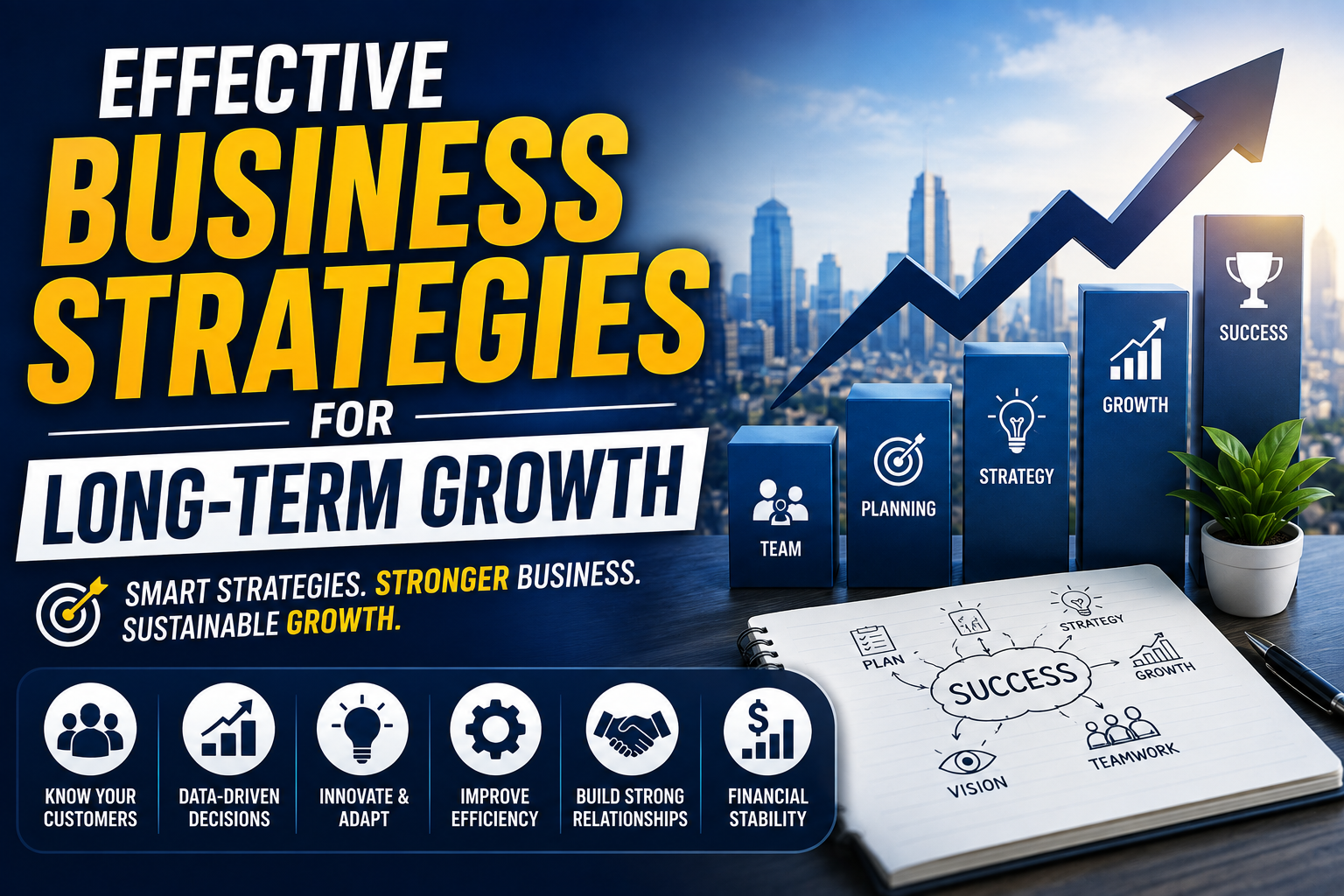
Effective Business Strategies for Long-Term Growth
Every business wants to grow, but long-term growth requires more than simply increasing sales. Successful businesses build strong strategies that improve customer relationships, strengthen operations, manage resources effectively, and adapt to changing market conditions.
A well-planned business strategy gives companies a clear direction and helps them make better decisions. Whether you are running a small business, startup, or established company, focusing on sustainable growth can help you remain competitive and achieve long-term success.
What Is a Long-Term Business Growth Strategy?
A long-term business growth strategy is a plan designed to help a company increase its revenue, customer base, market presence, and overall value over time.
Instead of focusing only on short-term profits, businesses with a long-term strategy focus on:
- Sustainable revenue growth
- Customer satisfaction
- Strong brand development
- Operational efficiency
- Employee development
- Technology adoption
- Market expansion
- Financial stability
A clear strategy helps businesses stay focused and prepared for future opportunities.
1. Understand Your Target Market
One of the most important steps toward business growth is understanding your target customers. Businesses need to know what their customers want, what problems they face, and why they choose one company over another.
Market research can help businesses understand:
- Customer needs
- Buying behavior
- Market trends
- Competitor strategies
- Pricing expectations
- New opportunities
When businesses understand their audience, they can create products and services that provide real value.
2. Focus on Customer Experience
Customer experience plays an important role in long-term business success. Satisfied customers are more likely to return, recommend your business, and become loyal customers.
Businesses can improve customer experience by providing:
- Fast customer support
- Easy communication
- High-quality products
- Personalized services
- Simple purchasing processes
- Reliable after-sales support
Building strong customer relationships can create a stable foundation for long-term growth.
3. Build a Strong Online Presence
In the digital age, businesses need a professional online presence to reach potential customers.
A strong digital presence may include:
- Professional website
- Search engine optimization
- Social media marketing
- Content marketing
- Email marketing
- Online advertising
A well-optimized website can help businesses attract new customers and establish credibility in their industry.
4. Invest in Digital Transformation
Technology can help businesses improve productivity and reduce operational costs. Digital transformation involves using modern technology to improve business processes and customer experiences.
Businesses can use technology for:
- Automated workflows
- Customer relationship management
- Cloud computing
- Data analytics
- Online communication
- Business automation
- Cybersecurity
Investing in the right technology can give businesses a competitive advantage and support future growth.
5. Develop a Strong Brand
A strong brand helps businesses stand out in competitive markets. Branding is more than a logo or company name. It includes the overall experience customers associate with a business.
Important elements of a strong brand include:
- Clear brand identity
- Consistent visual design
- Strong messaging
- Professional communication
- Reliable customer experience
A trusted brand can increase customer loyalty and make it easier to attract new customers.
6. Use Data to Make Better Decisions
Successful businesses use data to understand performance and identify opportunities.
Businesses can track metrics such as:
- Revenue
- Customer acquisition
- Conversion rates
- Website traffic
- Customer retention
- Marketing performance
- Operating costs
Data-driven decision-making helps businesses avoid unnecessary risks and focus resources on strategies that deliver results.
7. Build a Skilled Team
Employees are one of the most valuable assets of any organization. A skilled and motivated team can improve productivity, innovation, and customer service.
Businesses should invest in:
- Employee training
- Professional development
- Team communication
- Leadership development
- Performance management
When employees have the right skills and support, businesses are better positioned for sustainable growth.
8. Improve Financial Management
Strong financial management is essential for long-term business stability. Businesses need to monitor their income, expenses, cash flow, and investments carefully.
Effective financial management includes:
- Creating realistic budgets
- Controlling unnecessary expenses
- Monitoring cash flow
- Planning investments
- Maintaining emergency funds
- Reviewing financial performance
Good financial planning allows businesses to grow without creating unnecessary financial pressure.
9. Expand Products and Services
Businesses can increase growth opportunities by expanding their product or service offerings. However, expansion should be based on customer demand and market research.
Before launching a new product or service, businesses should consider:
- Customer needs
- Market demand
- Competition
- Production costs
- Profit potential
- Business resources
Strategic expansion can help companies reach new customers and create additional revenue streams.
10. Build Strategic Partnerships
Partnerships can help businesses access new markets, technologies, customers, and expertise.
Businesses can collaborate with:
- Technology providers
- Marketing agencies
- Suppliers
- Industry professionals
- Other businesses
Strategic partnerships can create mutually beneficial opportunities and accelerate growth.
11. Stay Adaptable
Markets are constantly changing. Customer expectations, technology, competition, and economic conditions can all affect business performance.
Companies that remain flexible can respond more effectively to change.
Businesses should regularly review their strategies and be willing to:
- Adopt new technologies
- Change marketing approaches
- Improve products
- Enter new markets
- Update business processes
Adaptability is one of the most important qualities for long-term success.
12. Prioritize Cybersecurity
As businesses become more dependent on technology, cybersecurity becomes increasingly important. Data breaches and cyberattacks can damage finances, reputation, and customer trust.
Businesses should implement:
- Strong passwords
- Multi-factor authentication
- Regular data backups
- Security monitoring
- Employee cybersecurity training
- Updated software
Protecting business data is essential for maintaining customer confidence and operational continuity.
Conclusion
Long-term business growth requires a combination of clear planning, customer focus, technology, financial management, and continuous improvement. Businesses that understand their market, build strong customer relationships, invest in employees, adopt modern technology, and remain adaptable are better prepared for sustainable success.
Growth should not only be measured by higher revenue. A successful long-term strategy should also create stronger customer relationships, efficient operations, a trusted brand, and a business capable of adapting to future challenges.
By implementing these effective business strategies, companies can build a strong foundation for sustainable growth and remain competitive in an ever-changing marketplace.